Getting started
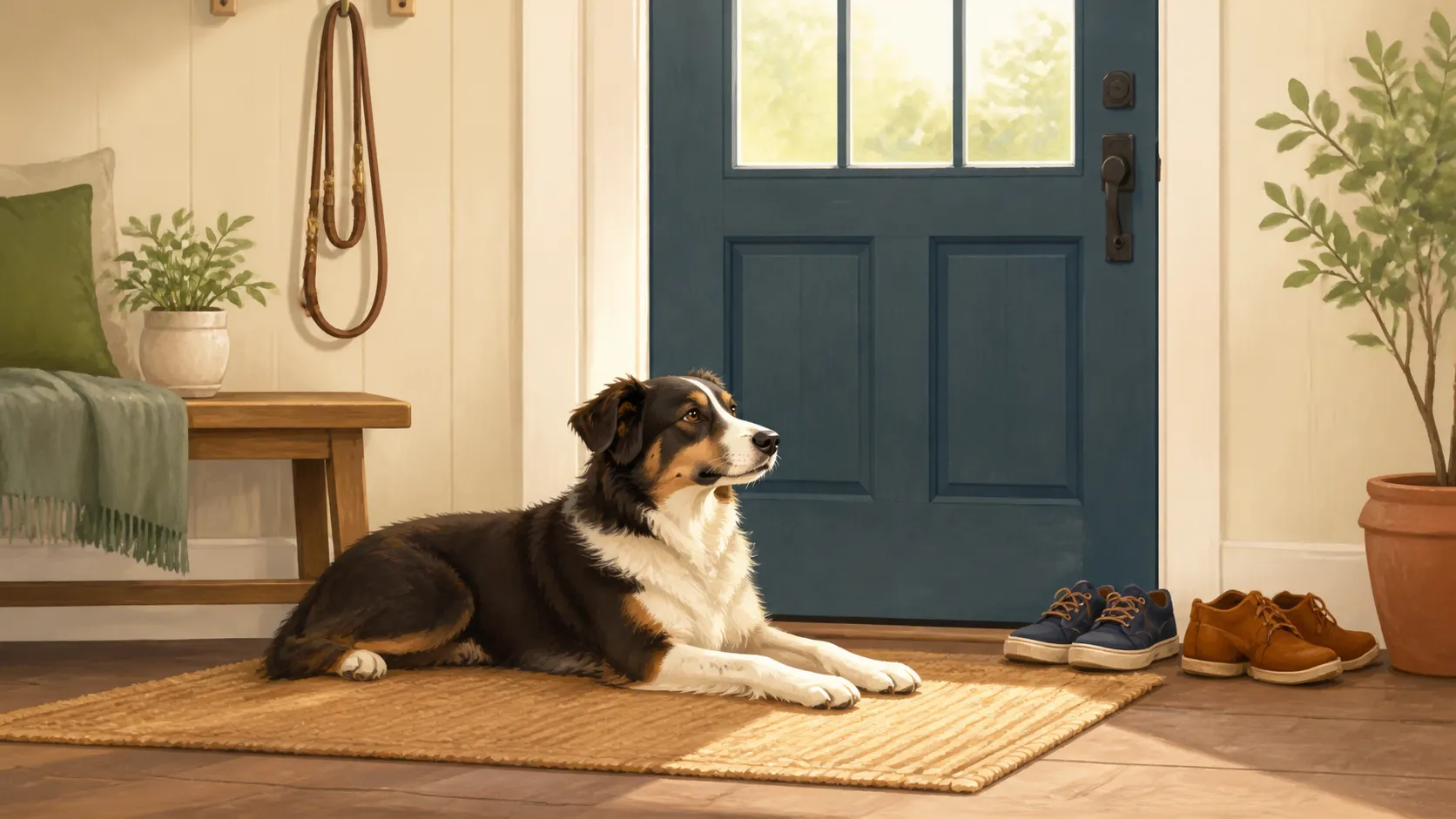
This page is for the owner of a dog who panics when left alone. You can read it top to bottom in about five minutes. Each section is a complete answer on its own, and each links to a deeper guide when you want more.
Is this separation anxiety?
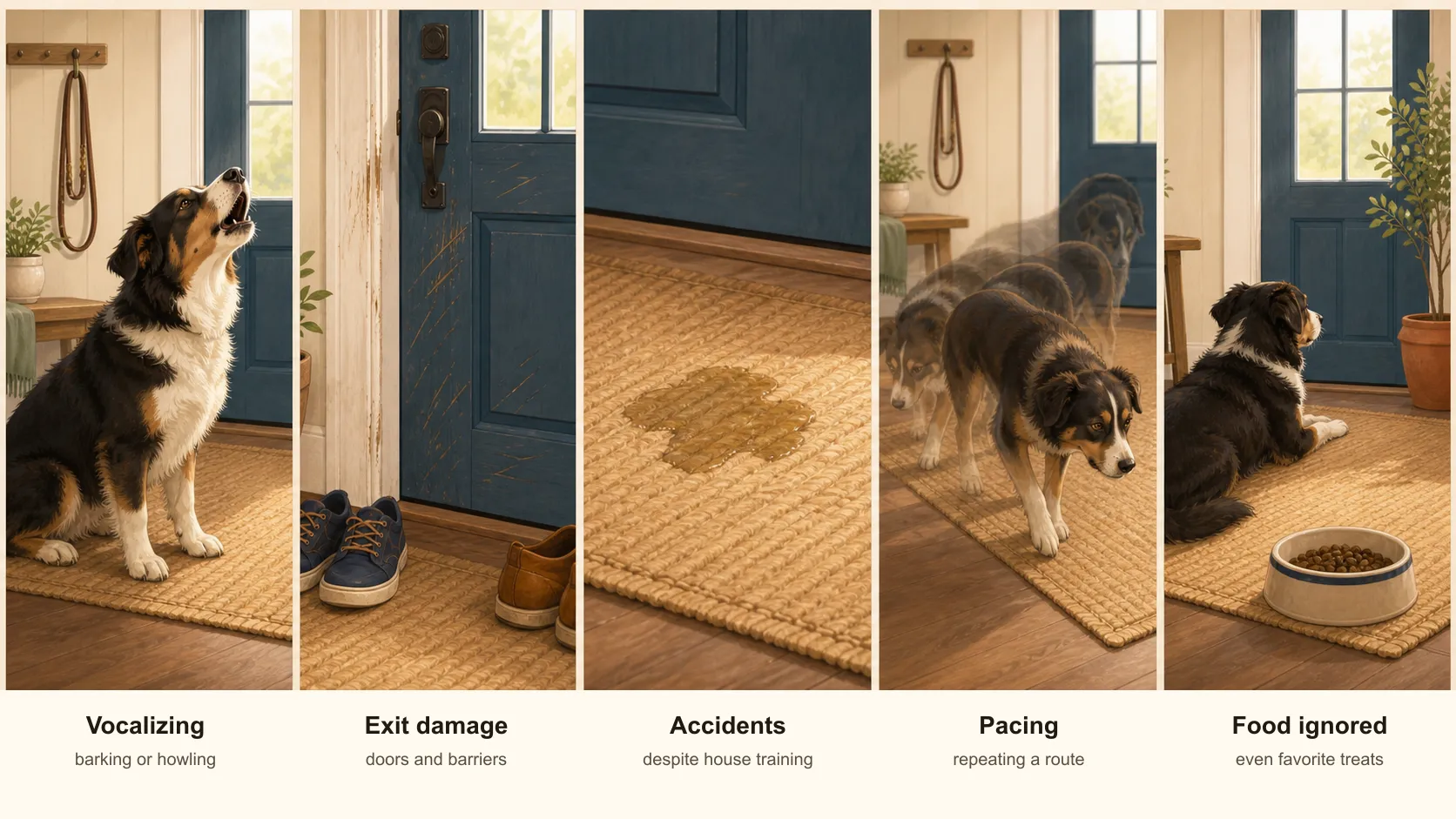
Separation anxiety is a panic response, comparable to a phobia. The signs cluster: barking, howling, or whining that starts within minutes of your departure; destruction concentrated at doors, windows, and crate bars; house accidents from a dog who is house-trained; pacing, drooling, trembling; refusing food or treats they would take with you home.
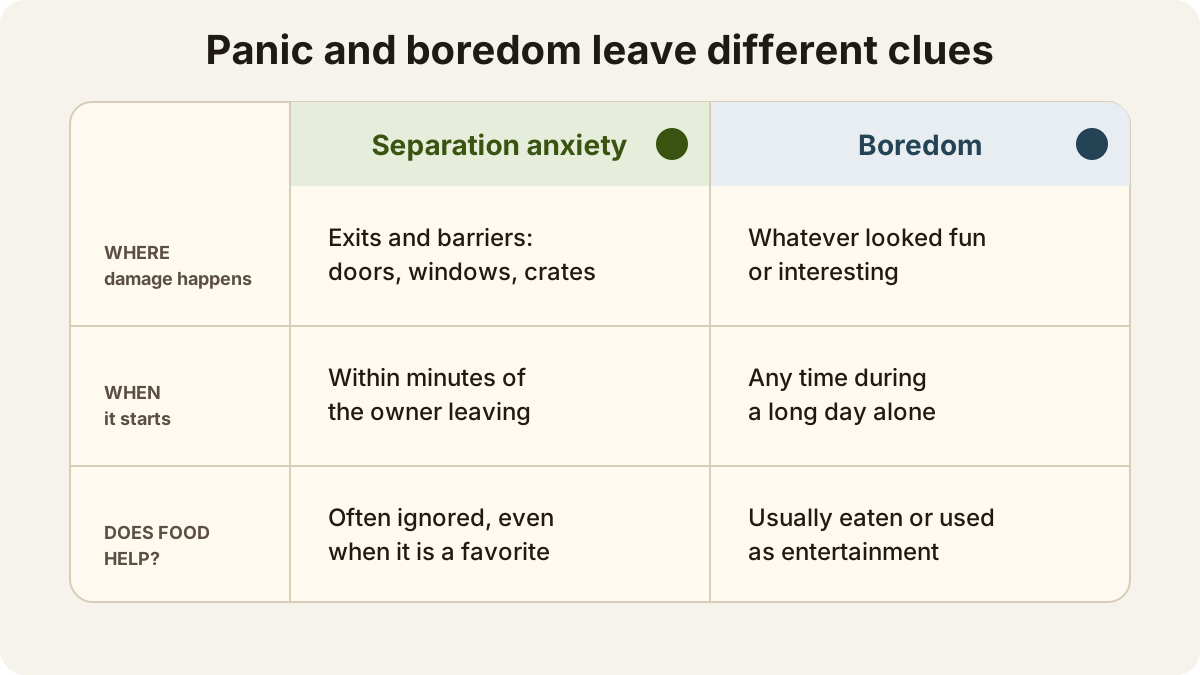
Boredom looks different. A bored dog chews whatever is interesting, at any point in a long day alone. An anxious dog targets the exits and starts as soon as you leave.
Two facts to hold onto before anything else on this page. It is treatable: dogs recover from this with structured training. And you did not cause it. Dogs develop separation anxiety after moves, schedule changes, rehoming, and sometimes for no reason anyone can find.
Full article: What is separation anxiety?
How the training works
Every credible treatment plan runs on the same method: systematic desensitization. You teach the dog that being alone is safe by leaving for durations so short the dog stays calm, returning before stress appears, and growing the duration over weeks in small, uneven steps. The uneven part matters: five seconds, then eight, then four, then ten seconds. A predictable ramp teaches the dog to brace for the longer absence they know is coming.
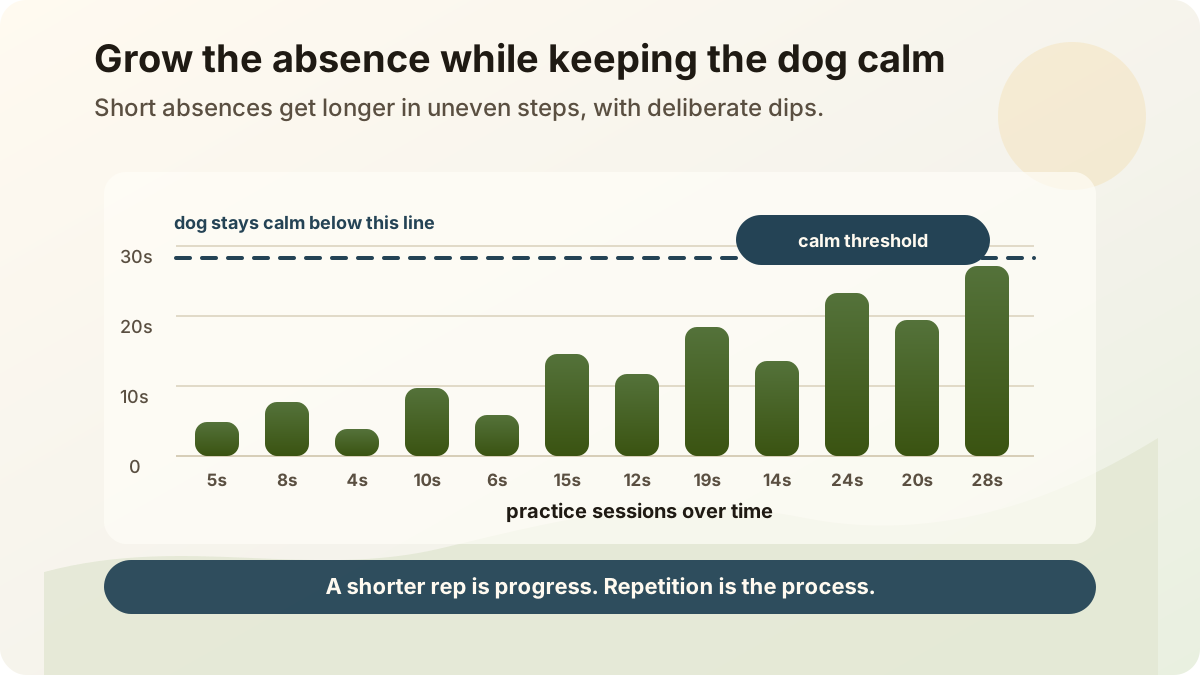
The requirement most people learn last: during training, the dog should experience no full-length absences at all. Every absence that pushes the dog over threshold rehearses the panic and sets the training back. Daycare, a sitter, family, working from home: management means arranging life so that, for now, the only alone time is training time.
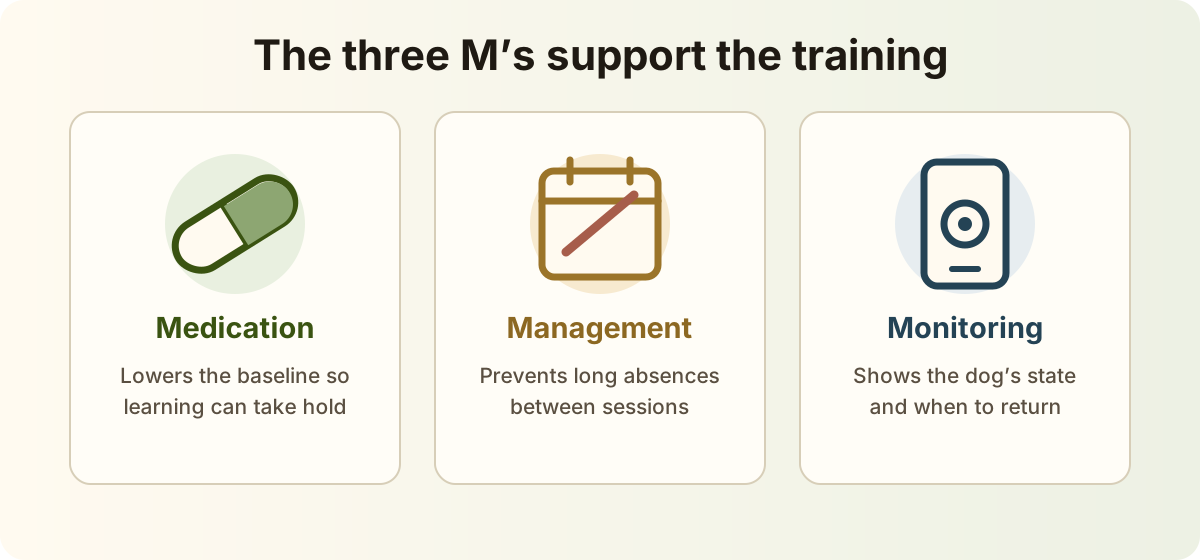
Trainers summarize the supporting structure as the three M’s:
- Medication: vet-prescribed anti-anxiety medication that lowers the dog’s baseline so training can work.
- Management: avoiding over-threshold absences between sessions.
- Monitoring: watching the dog on camera so you can read their state and time your returns.
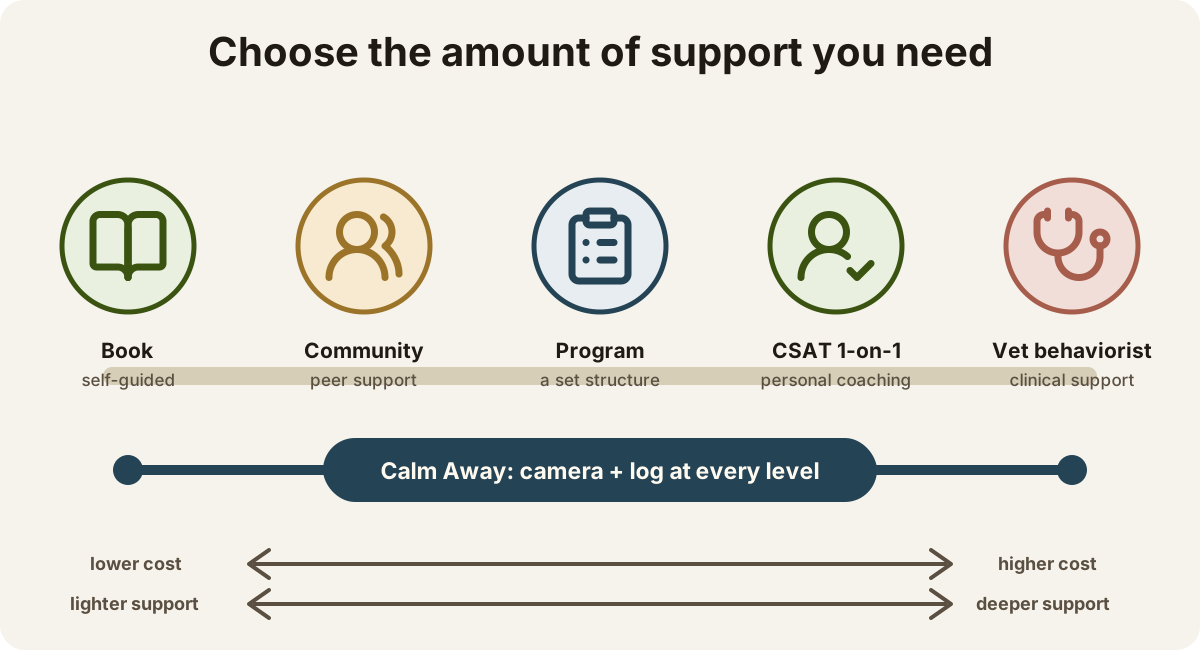
Books, certified separation anxiety trainers (CSATs), and veterinary behavior plans all run on this same engine; they differ in the amount of support and what they cost. Calm Away works alongside any of them. If you want one book, Julie Naismith’s Be Right Back! walks the whole protocol step by step.
Your first session, today
You can run a first session this afternoon. It takes a camera and about fifteen minutes.
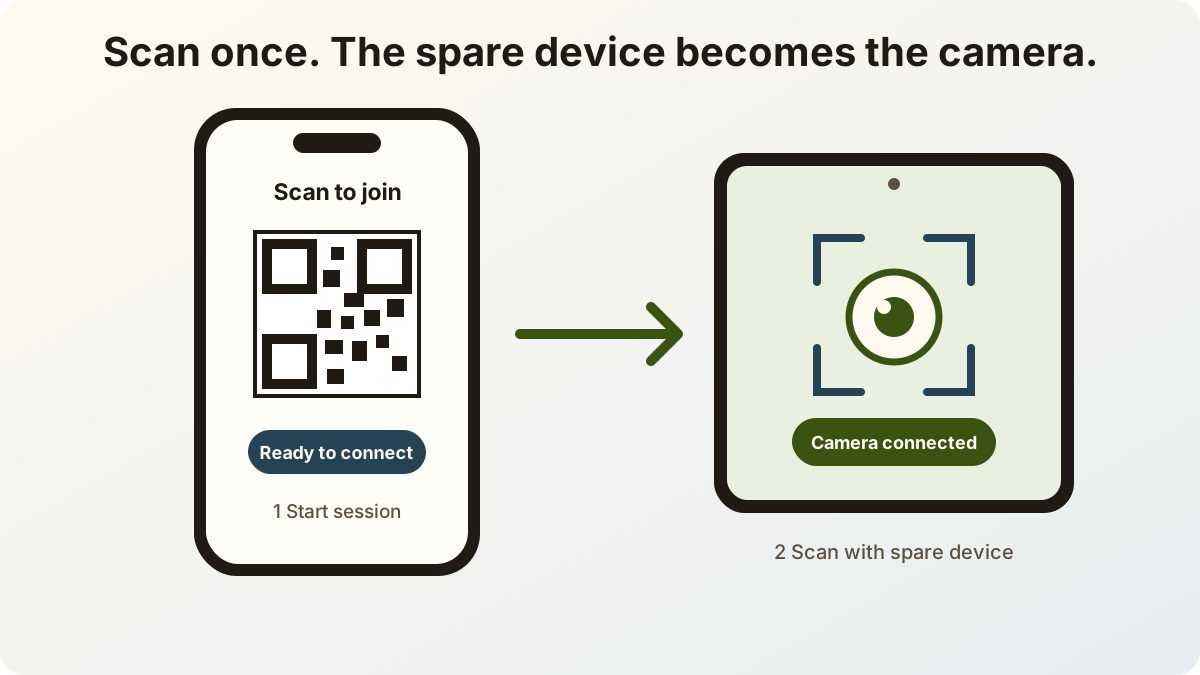
For the camera: Calm Away turns a spare phone or tablet into one. Start a session in the app, scan the QR code with the second device, and it streams to the phone in your hand.
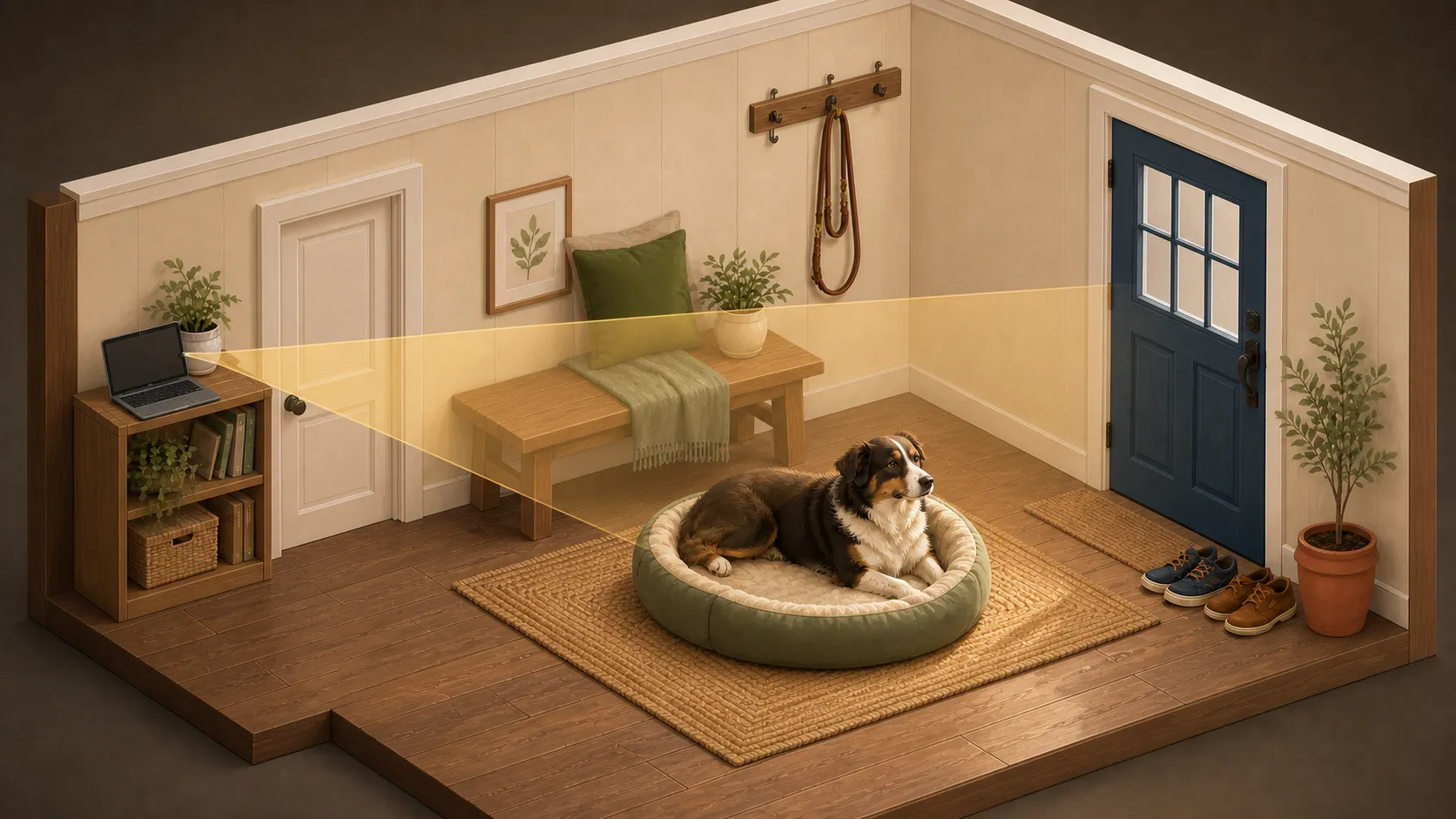
Set the camera so it can see the door and the spot where your dog settles. Then:
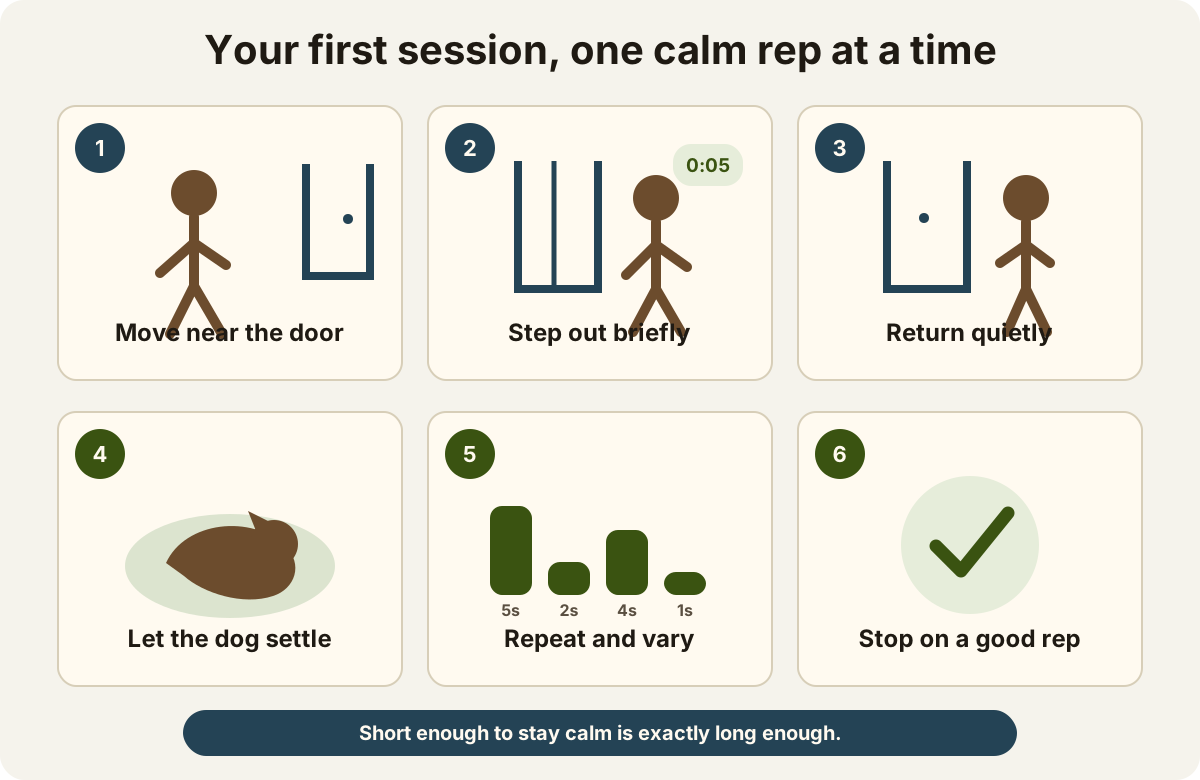
- Do something ordinary near the door for a minute or two, so your movement toward it stops being an alarm.
- Step out and close the door behind you. Count to five.
- Come back in before any stress shows. Keep the return dull; no greeting party.
- Let the dog settle again for a minute or two.
- Repeat three or four times, varying the count.
- Stop while it is going well.
Start so short the dog cannot fail. If five seconds is too long, do two. If the sound of the door is too much, open and close it without leaving. There is no duration too small to count as a rep. The win today is your dog watching you walk out and staying calm, at whatever length that happens.
Full walkthrough: Your first door session (coming soon).
Learning to read your dog
Returning early is the skill. Everything else in the protocol is scheduling; reading the early signals and getting back inside before they build is the part you practice.
The camera exists because your dog’s body language is the instrument you steer by. Early stress signals: pacing, whining, fixed attention on the door, lip licking, ears pinned back. Settled signals: lying down with weight shifted onto a hip, loose posture, a long sigh, grooming, sleep.
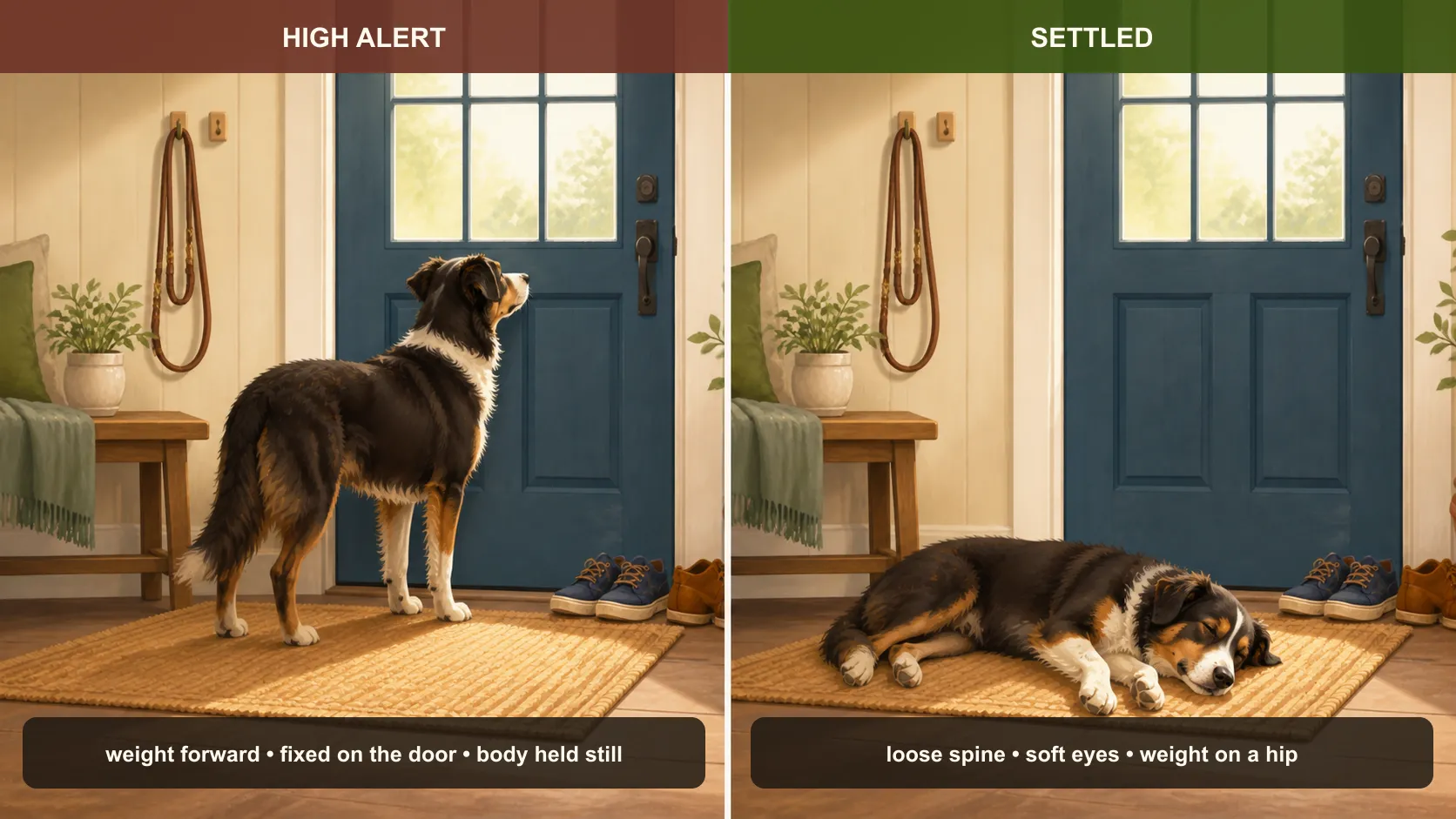
One caution: quiet can mislead. A dog standing frozen and silent at the door is far from calm. Watch the body, and after a few sessions you will know your own dog’s tells better than any list.
Deeper guide: Reading your dog on camera (coming soon). It will cover behavior cues, door and pre-departure desensitization, and what settled looks like across different dogs.
Medication, vets, trainers, and programs
Involve a vet when the case is severe: the dog injures itself trying to escape, cannot tolerate even seconds alone, or weeks of consistent training produce no movement. Anti-anxiety medication (a daily medication like fluoxetine, or a situational one like trazodone) lowers the dog’s baseline anxiety so training can get traction; a vet prescribes it and monitors the dog on it. Some owners feel that needing medication means they failed. Panic is physiology, and medication is part of the standard treatment plan for it, the same as it is for people.
Beyond self-guided training, the options stack in rough order of cost: the Naismith book above, online communities and Facebook groups for separation anxiety (large, active, and full of people mid-protocol), certified separation anxiety trainers for one-on-one coaching, and structured online programs. All of them run desensitization. Calm Away is the camera and the log, and it fits alongside any of them.
Nothing on this page is veterinary advice. Decisions about medication belong with your vet.
Deeper guide: Medication and your vet (coming soon).
What to expect
Plan in months. Most dogs need months of short, near-daily sessions to work up to a comfortable hour alone, and harder cases take longer. Anyone promising a fix in days is selling something.
Progress zig-zags in almost every case. A week of gains, then a regression after a thunderstorm or a houseguest, then gains again. The duration chart of a successful case looks like a stock chart: trending up through a lot of noise. A bad Tuesday is a data point, and one data point decides nothing.
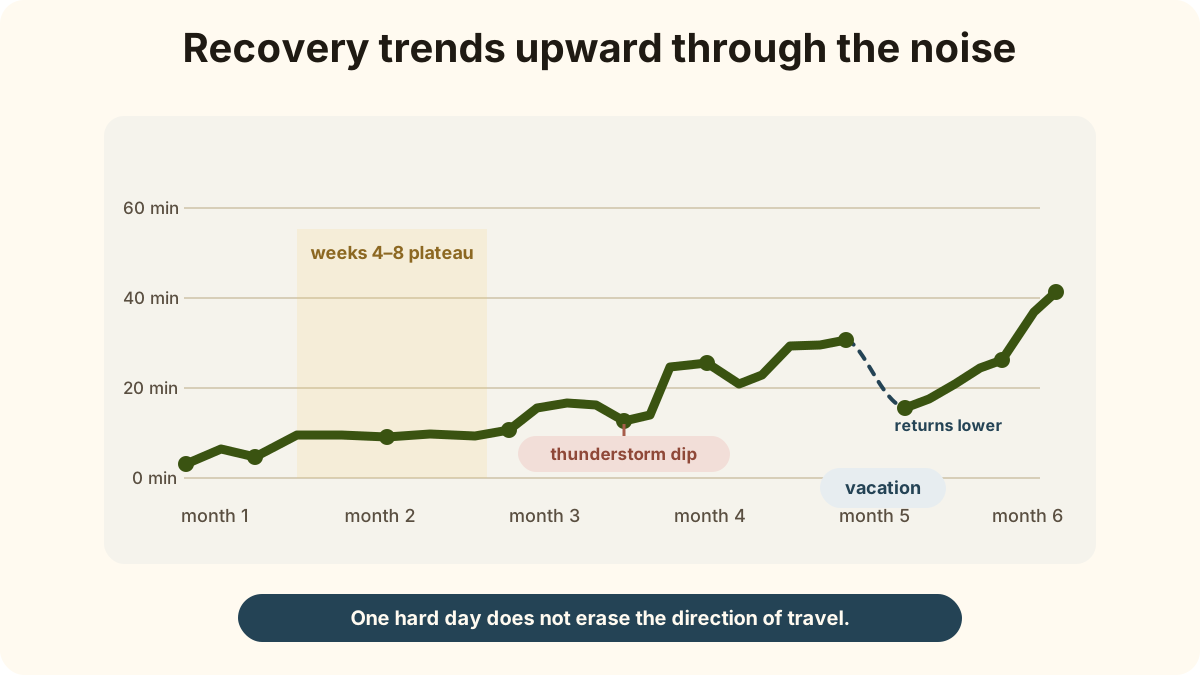
Plateaus around weeks four to eight are normal, and they are where most people quit. From inside, a dog holding two minutes for three straight weeks reads as failure; from the chart’s perspective it is consolidation, and the durations start moving again after.
Life will also interrupt you. A missed week does not erase the earlier work; dogs pick the thread back up faster than they built it the first time.
Knowing this shape in advance is most of the defense. When week five flattens out, nothing has gone wrong; the flat stretch is part of how recovery looks.
Your next step
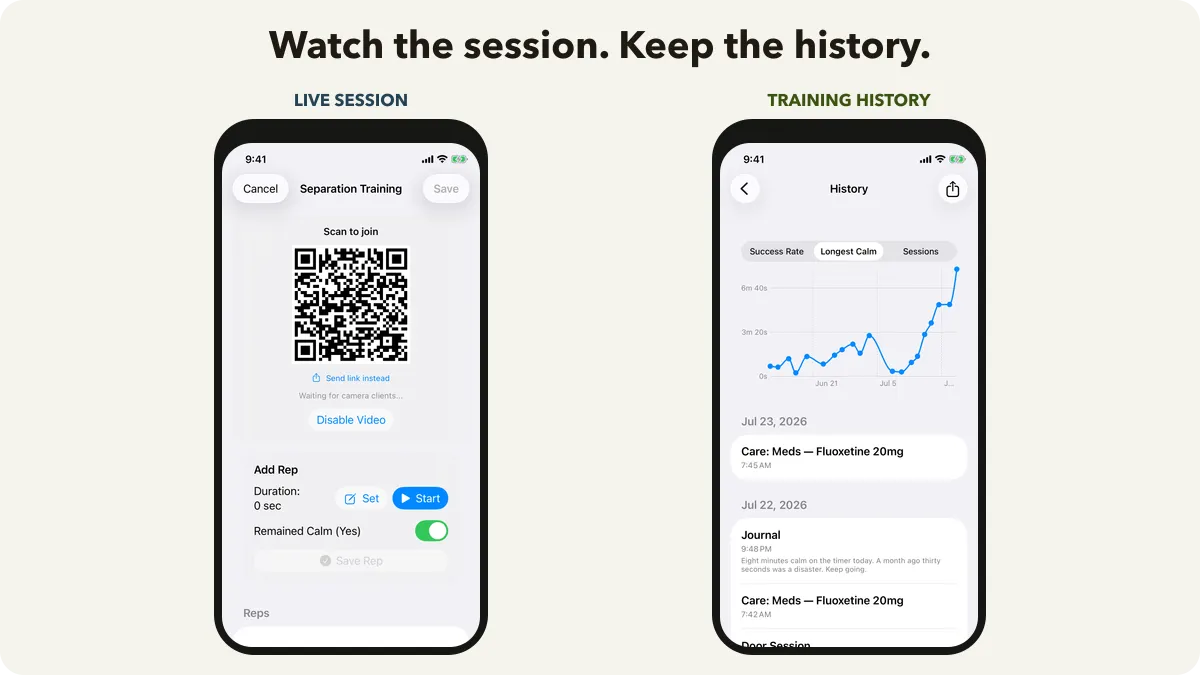
Everything above runs on repetitions: short absences, watched closely, logged so you can see the trend through the noise. Calm Away handles the watching and the logging. A spare phone becomes the camera, each rep gets timed and saved, and the duration chart from the last section builds itself while you train.